There’s a saying in the canine world that dog lovers will understand well: “A trained dog equals a happy owner.” But how can you tell if your dog is truly well-trained? Imagine for a moment that your dog is a four-legged athlete, all set to take part in the ‘Dog Olympics’. Would your canine companion climb onto the podium of obedience or take a detour to dig up the judge’s roses? In this blog post, we’ll highlight major signs of a well-trained dog.
Dive into our insightful guide and discover if your pet is ready for anything life might throw its way. From spontaneous adventures to welcoming new additions to your family, a well-trained dog adapts with elegance and grace. So, let’s find out if your furry friend deserves a gold medal or needs a bit more training time on the circuit!
Obedience and Manners
Having a well-trained dog is a game-changer for both you and your four-legged friend. It not only makes life easier and more enjoyable but also ensures a strong bond and a positive relationship based on trust and respect. A well-trained dog possesses excellent obedience and manners, displaying desirable behavior in various situations.
One aspect of obedience is how your dog behaves around guests or when encountering other people or animals. A well-trained dog will understand boundaries and not jump on people or display excessive excitement when meeting new faces. Instead, they will greet others politely, keeping all four paws on the ground and showing general calmness.
For instance, imagine bringing your well-trained dog to a social gathering where kids are running around. Your dog remains calm, respecting personal space and refraining from jumping up or nipping at them. Instead, they wag their tail gently and wait for pets from the children while maintaining a relaxed posture. This kind of behavior not only showcases good manners but also demonstrates their training foundations.
Training your dog helps establish clear communication between you, setting expectations and boundaries that result in desirable behavior patterns. By investing time into training your furry companion, you’re creating a more secure and comfortable relationship, reducing potential behavioral problems down the line.
Of course, some may argue that training can be restrictive for dogs, hindering their instincts or personality. However, effective positive reinforcement training methods focus on encouraging desired behavior rather than suppressing a dog’s instincts. It’s all about finding a balance that allows your dog to enjoy freedom while still being well-behaved and respectful.
How to Recognize Effective Command Response
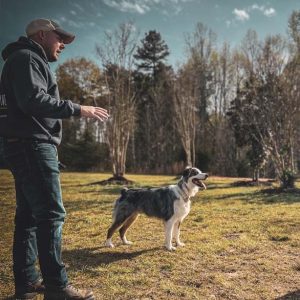
Effective command response is crucial when assessing your dog’s training progress. It demonstrates their understanding, willingness, and ability to follow instructions consistently. A well-trained dog will respond promptly to commands given by their owner, displaying obedience without hesitation.
One way to gauge effective command response is through verbal cues or hand signals. When you give a command, such as “sit” or “lie down,” observe how quickly your dog complies. It should be almost immediate, without any delay or confusion on their part. This quick response indicates that they understand what you’re asking of them and are familiar with the command.
For example, imagine taking your dog for a walk in the park. As you approach a crosswalk, you stop and give the command “Wait.” Your well-trained dog sits down beside you instantly, patiently waiting until you give them the signal to walk again. This kind of rapid response shows that they have internalized the command and are attentive to your cues.
Another sign of effective command response is consistency in behavior across different environments or distractions. A well-trained dog will respond to your commands regardless of the situation, whether you’re at home, in a crowded park, or amidst loud noises. This adaptability demonstrates their ability to focus on you as the handler, even in challenging circumstances.
Effective command response is a testament to the training techniques used and the relationship built between you and your dog. Positive reinforcement-based methods, which rely on rewarding desirable behavior, have proven to be more effective in dog training than aggression or punishment techniques. Through this approach, dogs develop a positive association with commands, making them more eager to comply and respond promptly.
Interactive and Social Skills
One of the major signs of a well-trained dog is their ability to interact and socialize effectively with other dogs and people. Dogs are naturally social animals, and they need to learn positive behaviors when engaging with others. A well-trained dog will display appropriate manners and behaviors when interacting with both humans and animals, making it easier for you to take them out in public without any issues.
For example, imagine taking your dog for a walk in the park. As you stroll along, you encounter another dog and their owner coming towards you. If your dog is well-trained, they will exhibit polite and friendly behavior. They may approach the other dog calmly, sniffing in a relaxed manner, or they may even greet the other dog by sitting politely or giving a gentle wag of their tail. On the other hand, an untrained dog might become overly excited, displaying aggression or pulling on the leash, making the interaction tense or even dangerous.
Well-socialized dogs not only make outings more enjoyable but also contribute to creating a positive community environment. When your dog is well-trained to interact with people and animals respectfully, it sets the tone for better interactions between dogs and their owners. A calm and controlled interaction can foster trust among pet owners and encourage responsible pet ownership. Additionally, properly socializing your dog can help prevent behavioral problems such as fear or aggression towards other dogs or people.
Some may argue that training a dog to be social limits their instincts or imposes restrictions on their behavior. However, this couldn’t be further from the truth. Appropriate socialization actually enhances a dog’s life by allowing them to engage confidently with their surroundings. It does not mean suppressing their natural instincts but rather helping them understand how to navigate social interactions safely and positively.

Identifying Positive Attitudes Towards People and Animals
A well-trained dog will exhibit a positive attitude towards both people and animals. This means they are friendly, approachable, and display appropriate behaviors when interacting with others. Dogs with a positive attitude are more likely to make new friends easily, adapt well to different environments, and contribute positively to their interactions with both humans and animals.
Dogs with positive attitudes are more likely to be accepted in various social settings, making them easier to include in family outings or gatherings. Furthermore, having a dog who interacts positively with people can lead to increased opportunities for you to engage in activities together outside of the home. Whether it’s going for walks in the neighborhood or participating in community events, a well-trained dog with a positive attitude broadens your horizons and strengthens the bond between you and your canine companion.
Some people may argue that a dog’s attitude towards others doesn’t necessarily reflect their level of training. While it’s true that personality plays a role in a dog’s attitude, proper training can greatly influence their behavior towards both people and animals. Training helps them understand what is expected of them in social situations and reinforces positive behaviors. Positive reinforcement techniques enable dogs to associate positive experiences with people, which leads to a more friendly and welcoming attitude.
Respect for Boundaries
One of the major signs of a well-trained dog is their ability to respect boundaries. Dogs with good training understand and adhere to the limits set by their owners, whether it’s staying off the furniture, not entering certain rooms, or respecting personal space. This is an essential aspect of a dog’s behavior and can make a significant difference in day-to-day interactions.
For example, imagine having guests over for dinner. As you sit down to enjoy your meal, your well-trained dog peacefully rests on their designated bed in the corner of the room, instead of begging at the table or constantly trying to snatch food. This not only makes the dining experience more pleasant for you and your guests but also showcases your dog’s respect for boundaries.
Showing respect for boundaries is crucial because it establishes clear expectations and helps maintain order in your home. When a dog understands that certain areas or actions are off-limits, it promotes a peaceful coexistence between them and their human family members. It also minimizes potential conflicts and keeps both the dog and everyone involved safe from harm.
Understanding Your Dog’s Spatial Awareness
Spatial awareness refers to a dog’s ability to navigate their surroundings while being aware of objects, people, and other animals around them. A well-trained dog possesses a strong sense of spatial awareness, allowing them to move confidently in various environments without causing disruption or harm.
Picture yourself taking your well-trained dog for a walk in a busy park. As you stroll along the paths, your furry companion walks calmly by your side, adjusting their pace and direction to avoid obstacles and maintain an appropriate distance from other walkers and dogs. This shows their heightened spatial awareness and demonstrates their ability to interact appropriately with the environment.
Understanding spatial awareness is crucial because it promotes safety and prevents accidents or confrontations. Dogs who lack spatial awareness may unintentionally knock over objects, bump into people, or invade personal space without realizing it. On the other hand, a well-trained dog with good spatial awareness ensures smooth interactions and minimizes the potential for mishaps or conflicts in any setting.
Some may argue that expecting a dog to have spatial awareness is asking too much from them, as they are naturally inclined to explore and investigate their surroundings. While it’s true that dogs are curious creatures, teaching them spatial awareness does not impede their desire to explore but rather enhances it by ensuring they can do so in a controlled and considerate manner.
Loyalty and Dependability Towards their Owner
One of the most heartwarming aspects of having a well-trained dog is the unwavering loyalty and dependability they exhibit towards their owner. It’s a beautiful bond that is built on trust and mutual respect. When your dog is loyal and dependable, you can have peace of mind knowing that they will always be there for you, no matter what.
Picture this: You’re feeling down after a long and stressful day at work. As you open the front door, your faithful canine companion greets you with a wagging tail and an abundance of unconditional love. Without hesitation, they sense your mood and snuggle up beside you, providing comfort and solace. This is the ultimate display of loyalty and dependability from your well-trained furry friend.
A truly loyal and dependable dog will not only be there for you emotionally but also in practical ways. They will follow your lead without question, whether it’s going for a walk, running an errand, or simply staying by your side at all times. Their obedience and commitment to being your companion create a deep sense of trust between you both.
Some may argue that loyalty and dependability are inherent traits in dogs, regardless of training. While it’s true that certain breeds may have natural tendencies towards loyalty, proper training plays a crucial role in reinforcing these qualities. Training allows dogs to understand their role within the family unit and teaches them to prioritize their owner’s needs above their own.
Recognizing Signs of Trust and Affection
In addition to loyalty and dependability, a well-trained dog will also show clear signs of trust and affection towards their owner. Trust is the cornerstone of any successful relationship, and when your furry companion trusts you implicitly, it fosters a deep bond that cannot be broken easily.
Imagine yourself in a crowded park with other people and dogs all around. Amidst the chaos, your well-trained dog stays close to you, maintaining eye contact and responding promptly to your commands. They trust you to keep them safe and guide them through unfamiliar situations. Their unwavering trust is truly heartwarming and confirms that your training efforts have paid off.
Dogs are naturally social animals, but it takes training for them to understand appropriate behavior and interactions. A well-trained dog will exhibit friendly and respectful behavior towards both humans and fellow canines. They will approach new people and animals with confidence, yet respect personal space when necessary.
Some may argue that showing affection is purely instinctual for dogs, unrelated to training. While it’s true that dogs have an innate ability to express affection, training enhances their understanding of how to appropriately display their feelings without jumping up or being overly exuberant. Training helps dogs channel their affection in ways that are acceptable within our human environment.
Through consistent training and positive reinforcement, the bond becomes stronger, allowing for a deeper connection based on mutual respect and understanding. By honoring boundaries, responding to commands, and exhibiting appropriate behavior, your dog shows their trust in you as their leader.
From Basics to Brilliance: Discover Divine Canine’s Dog Training Mastery
Elevate your canine companion to the podium of excellence with Divine Canine Dog Training. Our expertise transcends ordinary obedience, fostering a harmonious bond between you and your four-legged athlete. A well-trained dog from Divine Canine Dog Training exhibits more than just obedience; they radiate elegance, grace, and adaptability.
From impeccable manners and effective command responses to interactive social skills, we specialize in shaping dogs into well-rounded companions ready for any life adventure. Our commitment goes beyond boundaries, fostering loyalty, dependability, and a profound connection based on trust. Witness the transformation as your furry friend not only meets but exceeds expectations, showcasing a positive attitude, spatial awareness, and unmistakable signs of trust and affection.
At Divine Canine Dog Training, we don’t just train dogs; we sculpt lifelong companions who stand out in the ‘Dog Olympics’ of life. Your journey to a well-trained and extraordinary dog begins here. Contact us.